Kutch Embroidery
Sixteen communities, sixteen stitches, one shining grassland
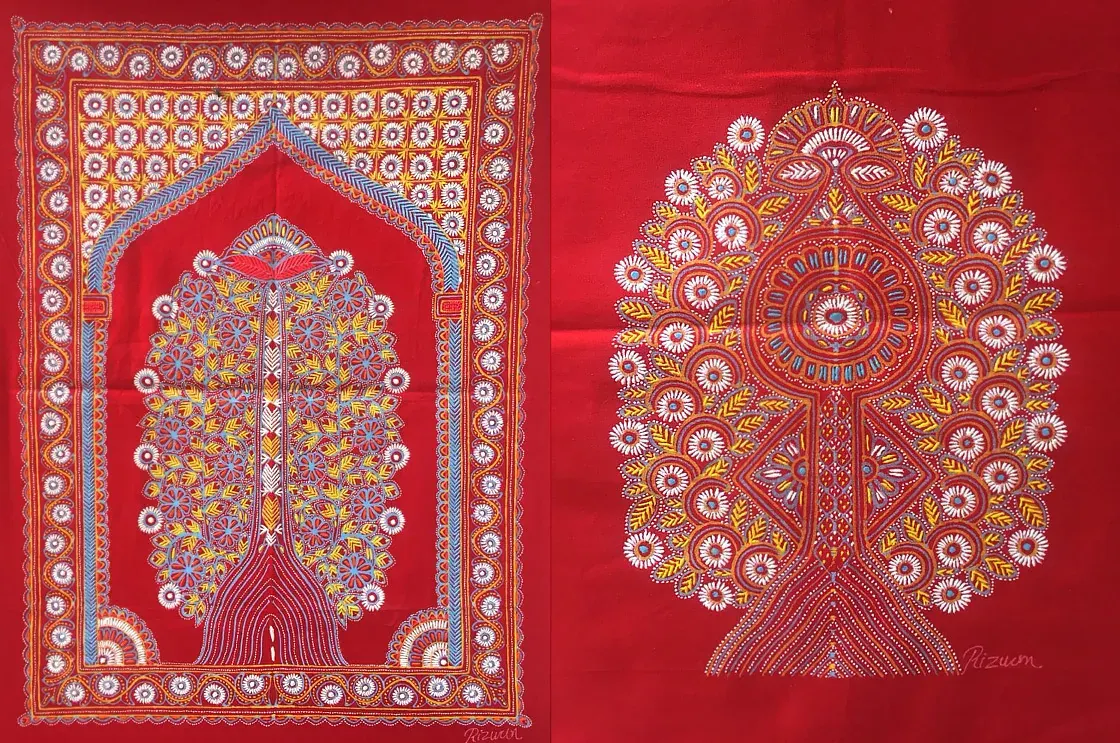
Embroidery in Kutch is a language with dialects: the tight architectural suf counted from the back of the cloth, the round mirrors of Rabari work, Ahir flowers, Jat cross-stitch dense as pixels, Mutwa stitches so fine they seem printed. Each pastoral community of Banni stitched its identity into dowries and dress — you could once read a woman's village from her yoke. Cooperatives like Shrujan and Qasab now carry the stitches to the world without flattening their differences.
- Counting
Suf embroiderers count warp threads from the cloth's reverse — the motif exists first in the mind.
- Stitching
Silk floss builds triangles, peacocks and flowering fields, community by community, stitch by stitch.
- Mirrors
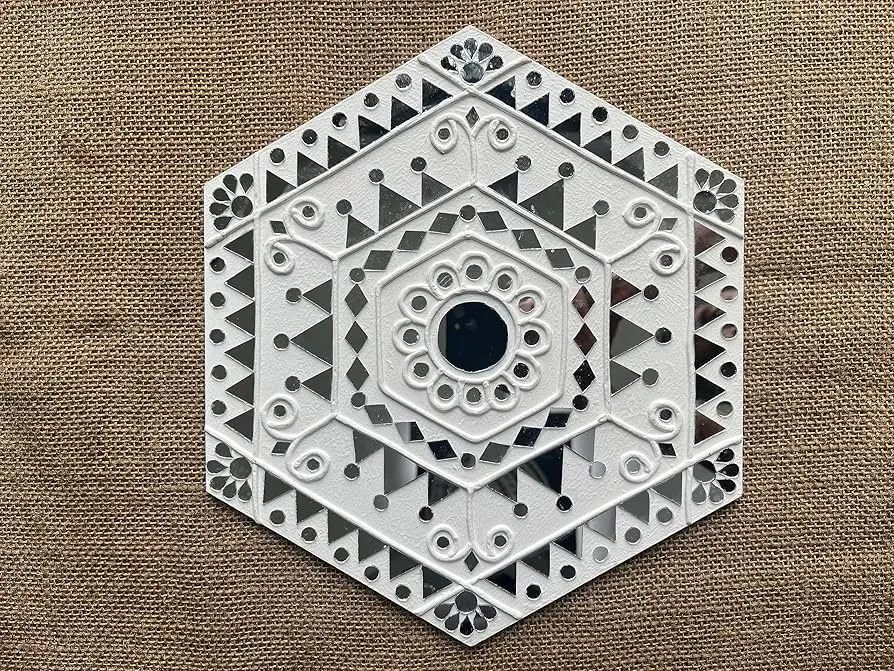
Shisha mirrors are lattice-locked into the cloth to flash light across a dark grassland.
- Finishing
Borders and edging bind the piece — a full dowry bag can hold a year of evenings.
- — Shrujan LLDC museum shop, Ajrakhpur
- — Qasab cooperative, Bhuj
- — Banni village homes — Hodka, Dhordo