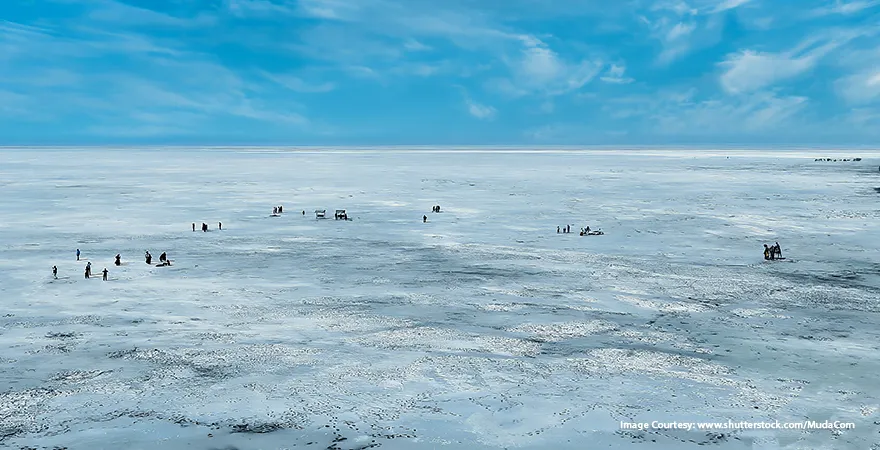
The first thing nobody tells you about the White Rann: it crunches. Underfoot the salt crust sounds like fresh snow, and that sound — plus a horizon with nothing on it — is what your brain will keep long after the photographs.
When to go
The Rann floods in the monsoon and dries into its white crust from late October. The season runs to February; by March the heat builds and the light hazes. If you can steer your dates, aim for a full-moon night (purnima) — the crust turns silver-blue and the crowd thins out after 9 pm, leaving the desert to the patient.
Tent city or village stay?
The Rann Utsav tent city at Dhordo is polished, plumbed and books out early. It is genuinely fun for a first visit — but our honest advice is to spend at least one night in a bhunga homestay in Hodka or Bhirandiyara: mud-and-mirror walls, millet rotla off the fire, and hosts who will point out constellations, not stage them.
The permit
Everyone crossing Bhirandiyara checkpoint needs a small entry permit — carry ID, pay at the booth or online, keep the slip for the return. Your driver will know the drill.
What to pack
- A proper layer. Desert nights in January drop close to freezing.
- Sunglasses for daytime — the glare off the salt is real.
- A torch for the walk back from the crust.
And leave room in the bag: the road home passes Khavda's potters, Nirona's rogan painters, and more embroidery than your budget has planned for.